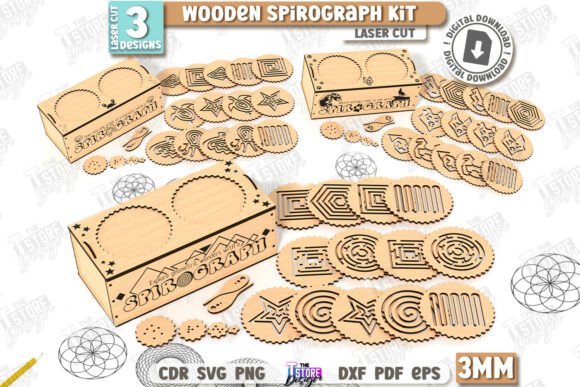
Spirograph Kit Laser Cut Calligraphy: A Modern Twist on Classic Geometry
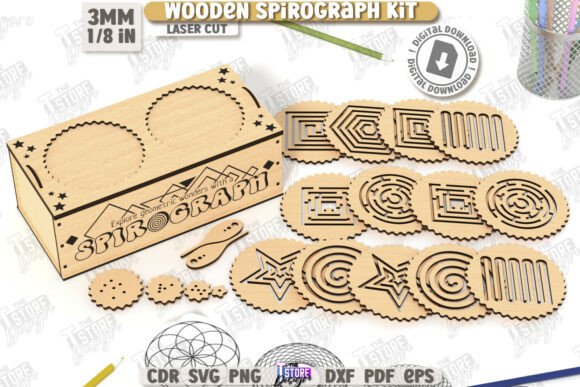
The resurgence of analog play and hands-on crafting has brought a renewed appreciation for geometric art tools, specifically the Spirograph Kit Laser Cut Calligraphy. Unlike the plastic versions of the past that often wore down or lost their teeth, this modern iteration leverages precision CNC technology to create durable, smooth-edged wooden components. For adults aged 20 to 50 who are looking to bridge the gap between digital design and tangible creation, this kit offers more than just a toy; it serves as a versatile tool for education, artistic expression, and even small-scale manufacturing.
Beyond the Toy Box: Real-World Applications
While the immediate association with Spirographs is childhood nostalgia, the applications for a high-quality wooden version extend far beyond a child's bedroom floor. In professional and semi-professional settings, these kits have found a home in design studios and educational workshops. Designers often use the intricate patterns generated by these gears as inspiration for textile prints, architectural facades, or logo concepts. The organic yet mathematical nature of the resulting calligraphy provides a visual language that feels both human and precise.
In the realm of Montessori and alternative education, the Wooden Spirograph Kit Laser Cut Educational Activities serves as a critical tool for developing fine motor skills and spatial reasoning. Teachers utilize these kits not just for drawing, but for teaching concepts of rotation, symmetry, and fractions. When a student physically manipulates the gears to see how a change in radius affects the final pattern, they are engaging in active learning that textbooks cannot replicate. This tactile feedback loop is essential for kinesthetic learners who need to "feel" the math to understand it.
Scenarios for Makers and Hobbyists
For the maker community, particularly those invested in laser cutting and CNC operations, this product represents a perfect entry point into digital fabrication. If you own a laser cutter, purchasing the physical kit is one option, but downloading the digital files allows you to customize the experience entirely. You can adjust the thickness of the wood, change the gear ratios, or engrave custom text onto the pieces before assembly. This level of customization turns a standard product into a personalized project, allowing you to create a unique set that fits your specific aesthetic or functional needs.
Consider the scenario of a workshop leader planning a weekend creative retreat. Instead of bringing pre-made plastic toys, they bring the Spirograph for Children Developing Game files, cut them from sustainable plywood on-site, and let participants assemble their own kits while learning about the mechanics of the machine. This dual-layered activity—learning about the tool and then using the tool—creates a memorable and educational experience that resonates deeply with adult hobbyists seeking meaningful engagement.
Technical Considerations for Digital Fabrication
When working with digital files for laser cutting, understanding the nuances of file formats is crucial for achieving professional results. The digital package typically includes a variety of formats such as SVG, EPS, PNG, PDF, and DXF. Each serves a different purpose, but compatibility with your specific software and hardware is paramount. A common pitfall for users, especially those utilizing Lightburn software, involves the distortion of dimensions when importing SVG files. This can lead to misaligned cuts or engraved text that does not fit the intended area.
To mitigate these issues, it is highly recommended to prioritize the DXF file format when working within Lightburn. DXF files generally maintain vector integrity better during import, ensuring that the scale remains true to the original design. Before committing to a full production run, always perform a test cut on scrap material. This simple step can save hours of frustration and wasted material. Additionally, pay close attention to the line colors in the design file. Typically, a RED line indicates a CUT path, while a BLACK line indicates an ENGRAVE path. Configuring your machine settings to recognize these color codes ensures that the outer shapes are separated cleanly while the internal details, such as numbers or decorative elements, are etched precisely without being severed.
Choosing the Right Materials and Settings
The quality of the final product depends heavily on the material chosen for cutting. While the design is optimized for wood, experimenting with acrylic or MDF can yield different aesthetic results. Wood offers a warm, natural feel that aligns perfectly with the Montessori philosophy of using real materials. However, the grain direction and density of the wood can affect how cleanly the laser cuts intricate gear teeth. Softer woods like basswood are easier to cut but may require lower power settings to avoid burning, whereas hardwoods offer durability but demand higher power and slower speeds.
For those looking to sell these kits or give them as premium gifts, the finishing process is equally important. After cutting, sanding the edges removes any char marks left by the laser, leaving a smooth surface safe for children to handle. Applying a food-safe oil or a clear matte finish not only protects the wood but also enhances the natural grain, elevating the perceived value of the item significantly.
Benefits Across Different Audiences
The versatility of the Spirograph Kit Laser Cut Calligraphy makes it a valuable asset for diverse groups. Parents seeking screen-free activities will find it an excellent way to engage children in STEM-related play. The open-ended nature of the game encourages experimentation; there is no single "correct" way to use the gears, fostering creativity and problem-solving skills. For educators, it provides a low-cost, high-impact resource for demonstrating complex mathematical concepts in a fun, accessible way.
Artists and illustrators might discover new ways to incorporate spirographic patterns into their work. By tracing over the wooden gears with ink or markers, they can create unique backgrounds for mixed-media projects. The precision of the laser-cut gears ensures that the patterns are consistent and repeatable, which is essential for creating cohesive series of artwork. Furthermore, the ability to modify the digital files means artists can create custom gear sets that produce patterns impossible to achieve with standard commercial kits.
Potential Limitations and Solutions
While the benefits are numerous, there are practical considerations to keep in mind. The primary limitation lies in the technical knowledge required to fabricate the kit from digital files. Users must be comfortable with vector editing software and laser cutter operation. If you are new to these technologies, the learning curve can be steep. However, many online communities and tutorials exist to help beginners navigate these challenges. Additionally, if you encounter issues with file formats or need specific adjustments, such as a different PNG size or a conversion to another file type, reaching out to the seller is often the best course of action. Most creators are willing to assist customers to ensure they get the best possible result from their purchase.
Another consideration is the maintenance of the equipment. Laser cutters require regular cleaning and calibration to ensure consistent performance. Dust buildup on lenses or mirrors can affect the quality of the cut, leading to rough edges on the delicate gear teeth. Regular maintenance schedules should be part of your workflow to keep the machine running smoothly.
Embracing the Future of Creative Play
The intersection of traditional play and modern manufacturing technology creates exciting opportunities for innovation. The Wooden Spirograph Kit Laser Cut Educational Activities is a prime example of how digital tools can enhance physical experiences. Whether you are a parent, teacher, artist, or maker, this kit offers a gateway to exploration and creativity. By taking the time to understand the technical aspects of file preparation and material selection, you can unlock the full potential of this versatile product.
As you explore the possibilities, remember that the journey is just as important as the final product. Experiment with different file formats, test various materials, and don't hesitate to reach out for support if you encounter challenges. The community around laser cutting and educational toys is vibrant and supportive, always ready to share tips and tricks. By following creators and staying engaged with future releases, you can stay ahead of the curve and continue to discover new ways to integrate these tools into your life and work.